Freecity Innovation Insights No.17 – The Housing Crisis: Western Sydney apartments need to take the stage
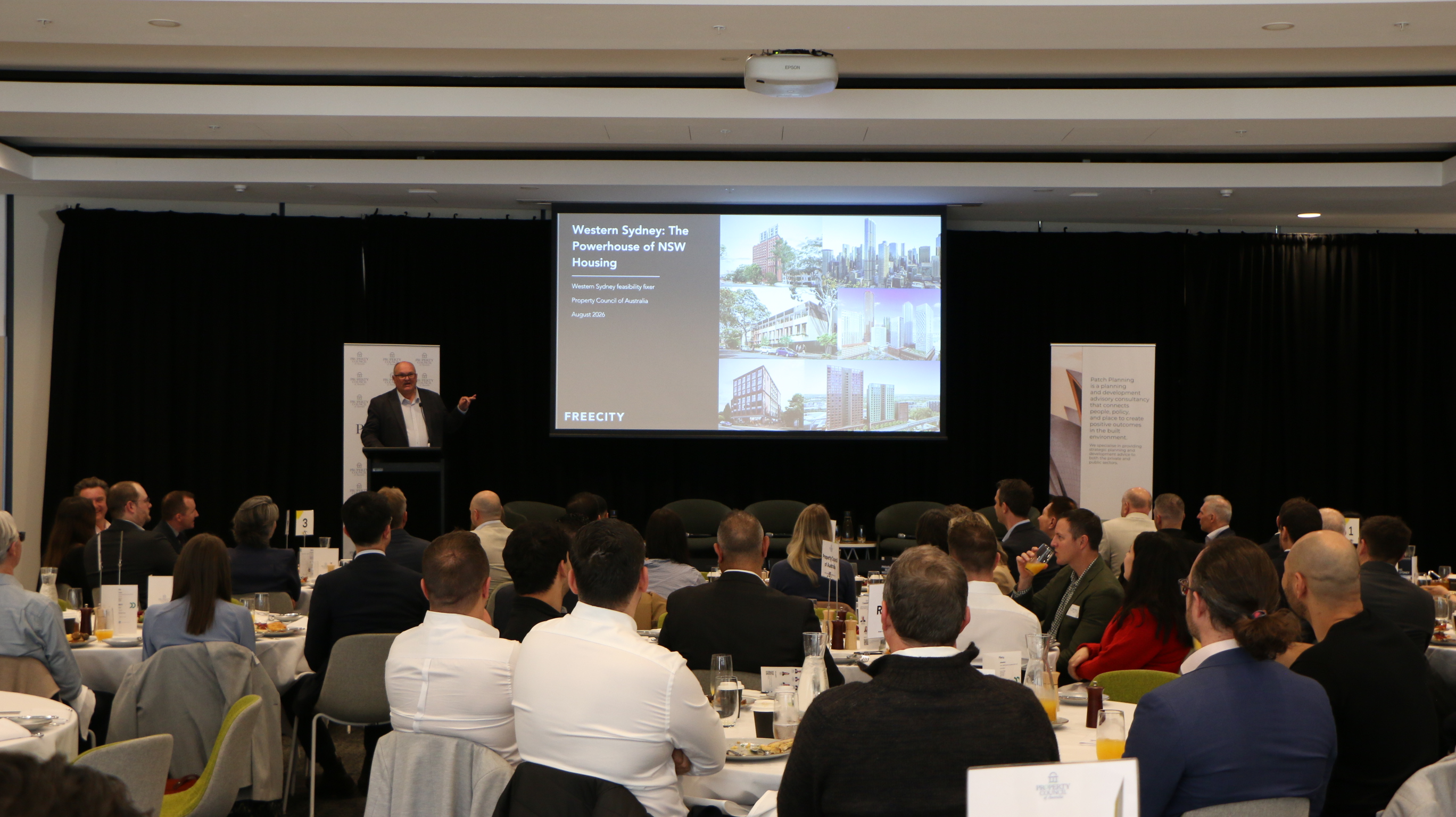
August was a big month for Freecity on the speaking circuit. I had the chance to address two back-to-back Western Sydney audiences, at Business Western Sydney’s Housing NOW! conference, then at the Property Council of Australia’s Feasibility Fixer breakfast, and Michael Romano – Freecity’s Executive Director of Development, was carrying our modular story north to present at Urbanity 2026 on the Gold Coast.
Freecity has more than half of its development portfolio in Western Sydney, so the topics discussed felt very close to us. Both events gave me the opportunity to share our analysis of the declining housing outlook, and my views on possible solutions to bring the region back as the housing powerhouse of NSW.
Western Sydney: the missing piece in NSW housing supply
So why does Western Sydney matter so much to NSW? Two things are happening here at once, Government is heavily investing in the region, with more than $32 billion of committed infrastructure in the pipeline, while the population is booming and taking an increasingly bigger share of Greater Sydney.
NSW is the laggard of the major states on the Housing Accord (41% below the target on completions and still running 30% below the approval rate the Accord requires). What concerns me more is how the Accord is tracking in Western Sydney, the growth region we can least afford to have stalling, and how little data there is available to track its’ approvals and commencements.
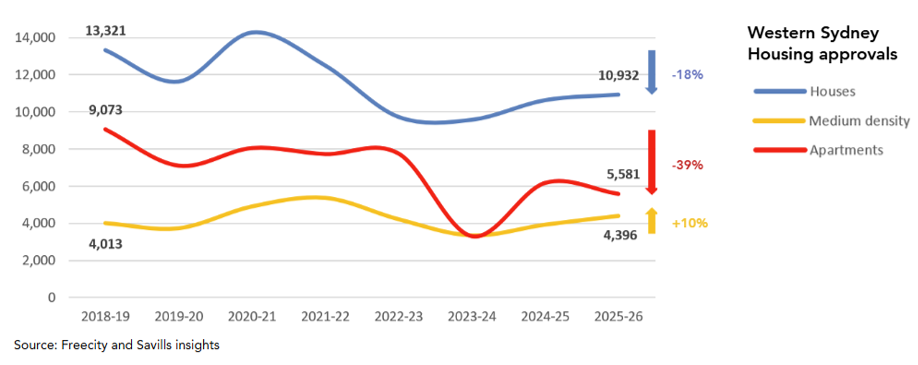
From what we were able to gather with the support of Savills, Western Sydney is still the most important housing market in NSW, but its contribution is dwindling, and apartments are falling harder than every other housing category. Western Sydney’s share of NSW dwelling approvals has been sliding in the last decade, and apartment approvals in the region have gone from around 9,000 in 2018-19 to roughly 5,000 today.
For NSW to deliver the housing it needs, apartment supply has to rebound now: 2026 is the last year you can start construction for major apartment projects and still complete within the Accord period, and houses and medium density cannot close the gap on their own. We also have to reckon with the Iran war and the resulting energy crisis, which have driven runaway inflation, further increases for construction costs and interest rate rises, which is stalling pre-sales and this brings Build-to-Rent back into focus.
A dual crisis, and the VMC-BTR fix
Alongside the supply crisis, Australia is reckoning with climate change. Net zero by 2050 is now the frame every asset is designed and financed against, and as the electricity grid gets cleaner, embodied carbon accounts for a rising share of a building’s lifetime footprint. That is what I call the dual crisis of housing supply and climate, and Volumetric Modular Construction (VMC) has an avenue to address both.
- On climate, clean manufacturing technologies are opening a pathway to structural steel with dramatically lower embodied carbon. Modular take this further, unlocking more circular outcomes through disassembly and reuse, in line with the Government’s goal to double Australia’s circularity rate by 2035.
- On supply, VMC modules are built fully finished in a factory in parallel with site works, which cuts program time. Modules are stacked to form a steel-structure building tied to a concrete core, with services connected from common corridors, and repeatable floor plates deliver substantially improved productivity.
VMC is not the only lever on supply, Build-to-Rent (BTR) presents a real opportunity of its own: institutional capital backs housing at scale without the need for presales, which is what holds Build-to-Sell (BTS) projects back in a downturn. Interestingly, our research also found that in global markets where BTR is far more established than ours, home ownership is no lower.
NSW holds the largest potential BTR pipeline in the country at nearly 10,000 units, and with the right policy support that is a key opportunity for Western Sydney. But the progression rate of BTR projects approved after 2021 has declined under high construction costs, taxes and developer contributions: for three years the average time from development approval to construction start has hovered around 30 months, with only one commencement in 2025, where before COVID projects were starting almost two years quicker.
The task at hand: fixing feasibilities!
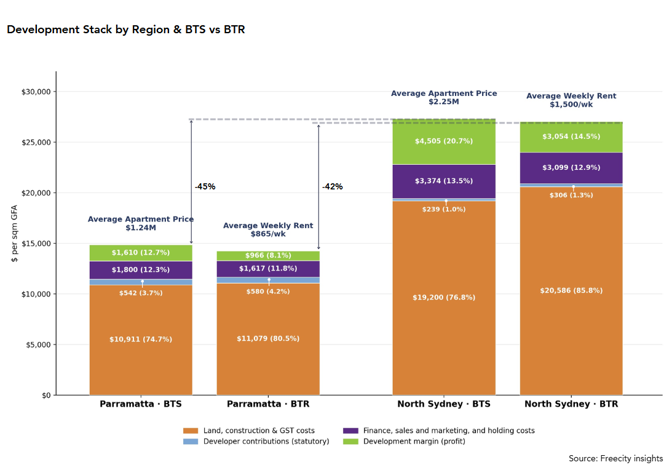
So we set out to find the pain points, comparing feasibilities in Parramatta against North Sydney for both BTS and BTR, based on our experience in both markets. Neither BTS nor BTR is feasible in Parramatta today (with over 800 basis point difference against North Sydney projects), because the Western Sydney feasibility is squeezed from both sides: a weaker revenue base and a heavier contributions burden. Total permanent contributions in Parramatta CBD have more than doubled since 2018. Remove those contributions at ~$50,000 a unit and both products are feasible: the Parramatta BTS margin on cost lifts from 12.7% to 18.2%, and BTR from 8.1% to 14.5%.
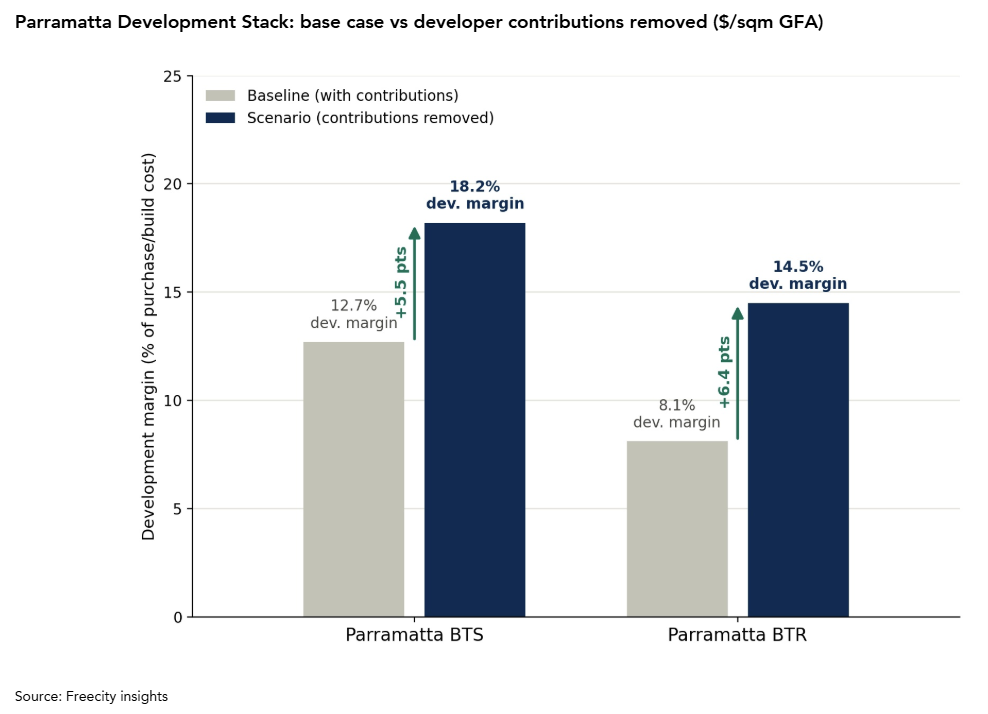
That is where the opportunity sits, and the ask is: cut developer contributions on Western Sydney apartments to deliver a reduction of around $50,000 per apartment for projects that can start in two years. Target the near-feasible projects in Western Sydney, and we believe it could unlock about 20,000 apartment starts and many of those DA’s are already there, and at a time when Queensland will be looking to attract builders for the Olympics and we need them to stay in Sydney.
The economics work for government too: a $500 million state contribution unlocks roughly $1.9 billion in stamp duty, while supporting around 99,000 jobs and some $32 billion in broader economic activity. There are also policy leavers which can deliver significant savings at no/low cost to government:
- Halve the carparking requirement for TOD projects;
- Developer Contributions to be paid at OC;
- No developer contributions where Affordable housing is being provided;
- Housing and productivity contribution pro-rata by apartment size.
Urbanity 2026
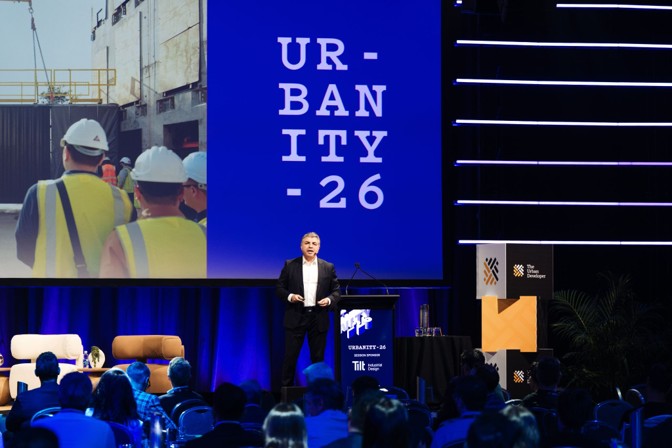
Up on the Gold Coast, Michael Romano our Executive Director of Development, took the modular story to Urbanity 2026. It’s a good reminder that the pressures we’re talking about in Sydney, including rising costs, feasibility gaps and a construction sector that has to find a faster, better way to build, are playing out in every growing Australian city.
That is particularly true in Queensland, where the Brisbane 2032 Olympic and Paralympic Games are driving major housing needs, both for the athletes and visitors the Games will bring, supported by strong population growth and for the construction workforce that has to build the Games infrastructure in the years before it. A different city, but the argument for building with VMC stays the same!
Written by Steven Mann
Published: 9 November 2026