Freecity Innovation Insights No.15 – The Inherent Advantages of VMC, part 5 of 6: Technology rich solutions
One of the more noticeable trends I have seen across construction in the past few years is how technology rich the industry is becoming. For a sector traditionally slow to embrace change, that is a significant positive shift.
This shift has been necessary as productivity has been falling for decades while costs have risen and governance/compliance obligations have tightened considerably after a run of high-profile defect failures. There is also now a far greater understanding of how important data is to running a project properly, because decisions that were once made on judgement and experience are expected to be evidenced, and that evidence only exists where there is a framework in place to capture the right information.
For Volumetric Modular Construction (VMC) none of this is a recent addition, because technology is built into factory fabrication. In this Innovation Insight I want to set out how that works in practice, and why I believe it is the reason VMC will out-perform conventional construction on quality control.
Inheriting from the manufacturing sector
The starting point is that building modules sits closer to manufacturing than it does to construction. Manufacturing carries an inherent repeatability, in that it produces products which are meant to be exactly the same as one another, made in a controlled environment through established steps that are documented and improved with each new project.
It is also monitored with technology considerably more mature than anything the construction sector has developed so far. Factory production systems have been refined over decades in industries such as automotive, aerospace and electronics, where process monitoring, production tracking and statistical quality control are long settled practices rather than emerging ideas.
Apartment delivery on a conventional site has no such consistency behind it: every project is usually bespoke, being completed across different trades and conditions, so the range of outcomes is much wider.
Live progress, traceable materials, controlled quality
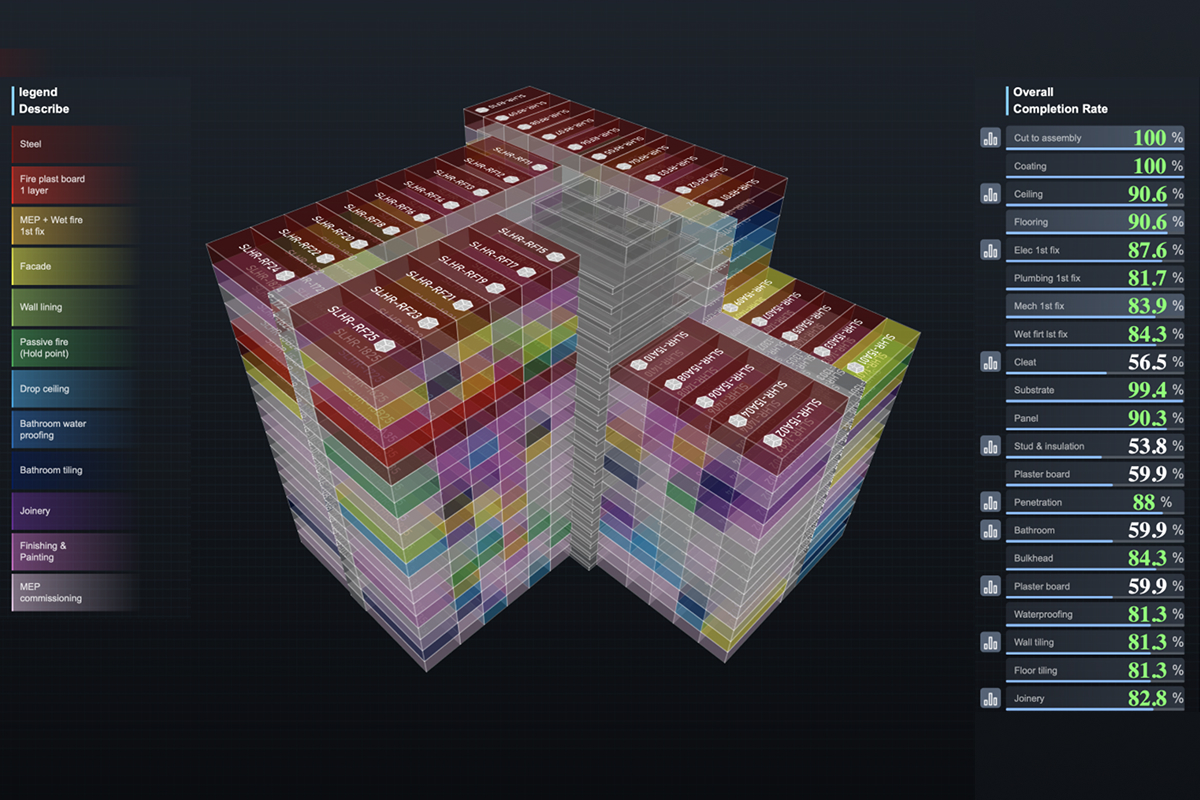
For our VMC modules, progress is tracked live from a central traceability platform, so at any point we can see which modules are in production, what stage each one has reached and when. 3D scans of individual modules can also be accessed to validate those records.
On a conventional project, progress reporting depends on site engineers walking apartment after apartment, inspecting the same rooms over and over and writing up what they have found, which is slow, partial and out of date almost as soon as it is issued. The difference for governance is considerable, because we have certainty about where a project actually stands.
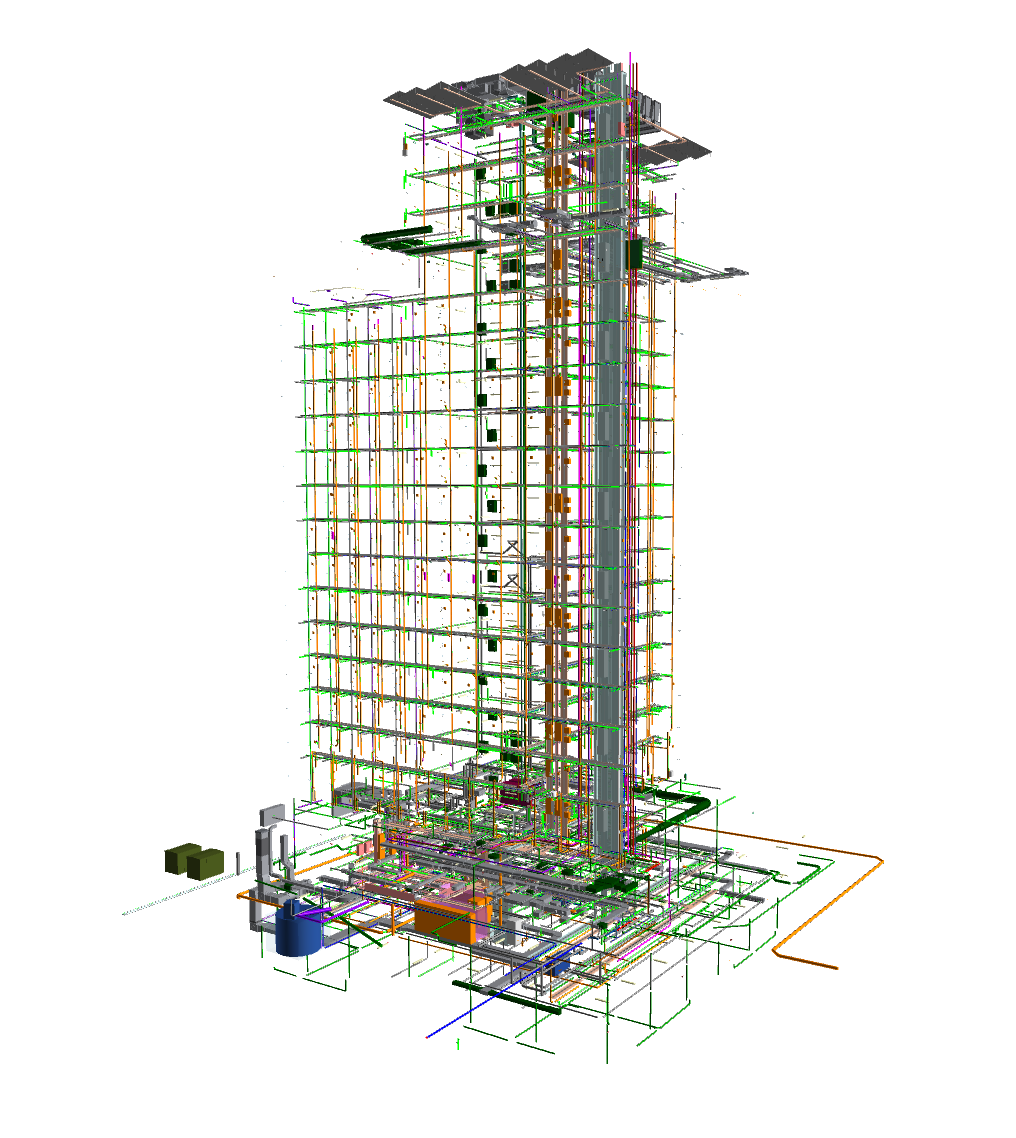
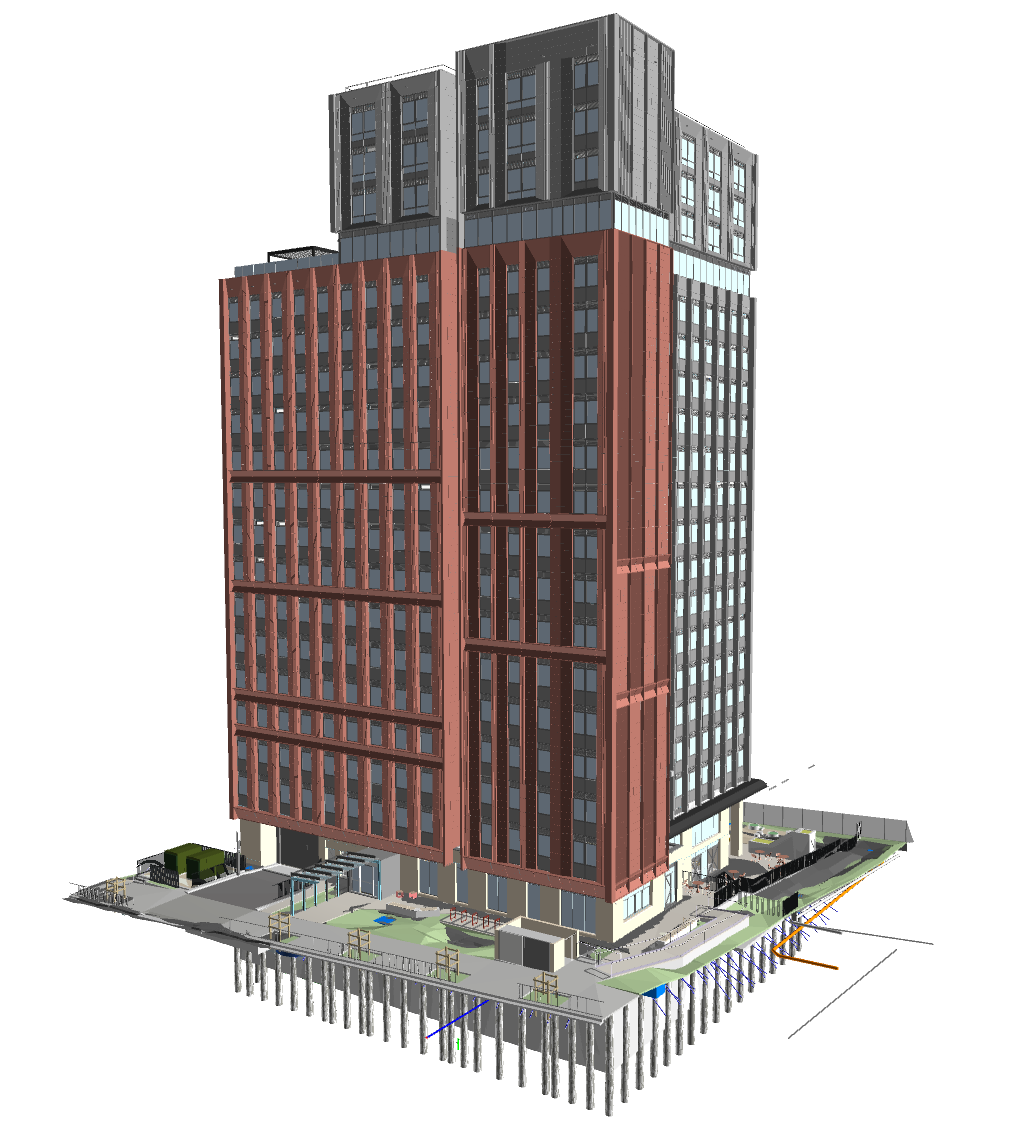
The same platform gives us much better transparency in two further areas. Materials are tracked through the build, so we know what went into each module, the technical characteristics and relevant documentation of each building component. Every module is modelled in BIM, with asset and traceability information linked for handover and operations.
When connected to ongoing operational data, this provides the foundation for a digital twin, giving facility managers an accurate picture of what is installed and where, long after handover. Materials traceability is also relevant for ESG reporting, as we are required to document product certifications and embodied carbon for our projects’ sustainability ratings.
This benefit of VMC counts most exactly where we need to deliver housing at scale: in places people actually want to live, next to high-quality public transport, services and amenities. Those are usually dense, urban locations with established communities, busy roads and constant pedestrian activity, and a long list of stakeholders to manage throughout construction. In such settings, reducing the impact on the surrounding streets makes a dramatic difference.
It also gives us far better control over quality. Every defect raised and every resolution recorded becomes part of the module’s memory. Because those records accumulate across a production run, we can analyse repeated issues, work out where the process is letting us down, and improve on the next project. As the owner of our Living Sector projects, I would say this matters more to us than to most: the value stays with us across the whole life of the asset, and we remain responsible for defect claims long after the statutory liability period has expired.
The NSW Building Bill opens up pathways for certification at scale
On 4 August 2026, I was pleased to see that the NSW Parliament passed the Building (Approvals and Practitioners) Bill 2026, which recognises Modern Methods of Construction in the state’s approvals framework for the first time. Much of the practical detail will sit in the Regulations still being developed, and that is where the opportunity lies: those Regulations could put technology at the forefront of how buildings are certified and lift productivity across the industry.
Transparent traceability and daily reporting of fabrication are what a certification regime needs if modules are going to be signed off at scale, rather than module by module. In practice, that means one module being certified as representative of the quality and output the rest of the fabrication run will deliver, with the production data standing behind that judgement.
The benefit would not be limited to governance. The approvals framework has lagged behind the way innovative builders are actually delivering projects, and closing that gap takes duplication and waiting time out of the process. That means faster delivery, greater certainty, and efficiencies that flow directly into productivity.
Why technology makes for better buildings
Everything described here points in the same direction. Producing a building in a controlled environment, monitored by traceability technology and recorded module by module, makes quality a property of the process rather than something inspected at the end. That is why I believe technology is the VMC advantage that carries all the others, and why we will keep investing in it.
There is more to come as our projects move from design and fabrication into delivery, and we look forward to sharing it!
Written by Steven Mann
Published: 24 September 2026