Freecity Innovation Insights No.13 – The Inherent Advantages of VMC, part 3 of 6: Productivity – Time and cost savings
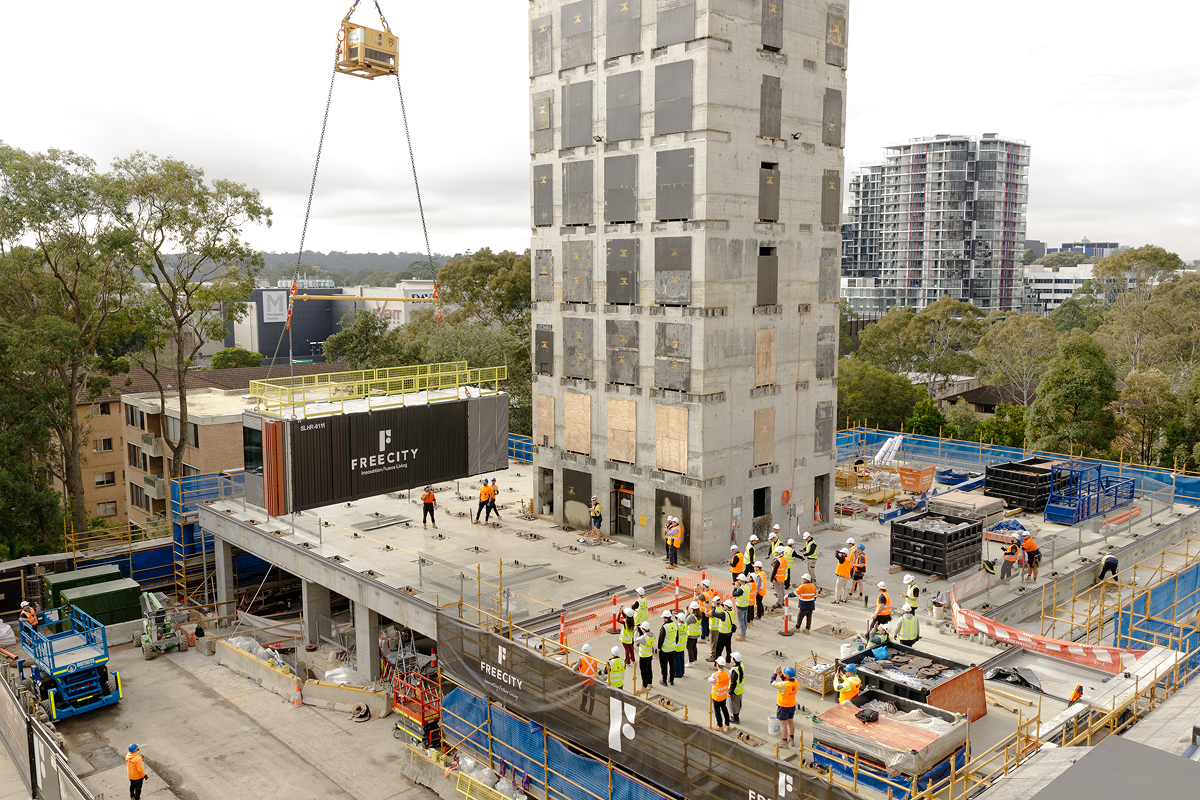
It has been an eventful couple of weeks for Freecity! Inside a fortnight we have had the first modules arrive on site at our PBSA project in Herring Road, Macquarie Park and our Development Approval came through for Tempus Street, Rouse Hill.
After all the talk about what Volumetric Modular Construction (VMC) can do, you can now stand in Macquarie Park and watch an apartment building rise a floor at a time, with fully fitted-out units, faster than anything built the conventional way.
That matters, because productivity is the argument that counts. So, let’s briefly remind ourselves of the major challenges for the Australian housing market:
- We are producing housing roughly 50 per cent slower than we did 30 years ago, an issue that fuels a growing under-supply to demand and a growing housing affordability crisis, where for most of this century we cannot sustain supply levels to meet demand and affordability relative to wages;
- Construction prices have increased substantially since COVID, and particularly for apartment costs, which have doubled in less than a decade.
In response to these challenges, VMC can be a major contributor to change with its inherent Productivity advantages of time and cost savings.
Speed and cost are two sides of the same coin
The increased productivity in VMC comes from doing two things at once. While the basement and ground works progress on site, the apartment modules are being manufactured in a factory in parallel, fully fitted out with bathrooms, kitchens, finishes and services. By the time the structure is ready, the modules are ready too. They arrive to site, they are stacked and connected to the concrete core, and the building goes vertical at a pace conventional construction simply cannot match.
It is too early to say what the overall time savings will look like at Macquarie Park, and as our first project they are unlikely to be reflective of what VMC can achieve over the longer term, however it is already going up at about a floor a week. The overseas examples are instructive: the reduction in program can be significant, in the order of 20 to 50 per cent.
It is also important to note that right now, early in our delivery program, the cost savings from building with VMC mostly flow from that shorter program: less time paying for finance, preliminaries and supervision. Also, by finishing the project earlier, developers can access the revenue streams from these projects sooner, which is sometimes the difference between one project’s feasibility working and another’s not.
But the real prize is repeatability. Our vision is for every project using VMC to make the next one faster, less expensive and better quality. Because the modules are standardised and manufactured to the same/similar specification again and again, the cost curve bends downward from one project to the next. Every module is a chance to refine the process and improve on what came before, as you bring in better and less expensive materials.
From a single building to a pipeline: Rouse Hill
The real manufacturing savings come from having a pipeline, such as Freecity’s 6,000 new homes across Sydney. Tempus Street, Rouse Hill is Freecity’s first Build-to-Rent and Co-Living project to secure approval, and it shows the productivity case travelling across the housing continuum, from student accommodation to rental homes.
Approved as a State Significant Development, the ~$400 million project will deliver 548 homes across three towers of 23, 18 and 11 storeys: 332 Build-to-Rent units, including 105 dual-key apartments for flexible, intergenerational living, alongside 216 co-living studios aimed at younger residents and the key workers, including those who will staff the future Rouse Hill public hospital nearby. This TOD project is directly opposite the Rouse Hill Metro station, adjacent to the Sub-Regional Shopping Centre, and is targeting a 5 Star Green Star rating and a WELL for Residential certification.
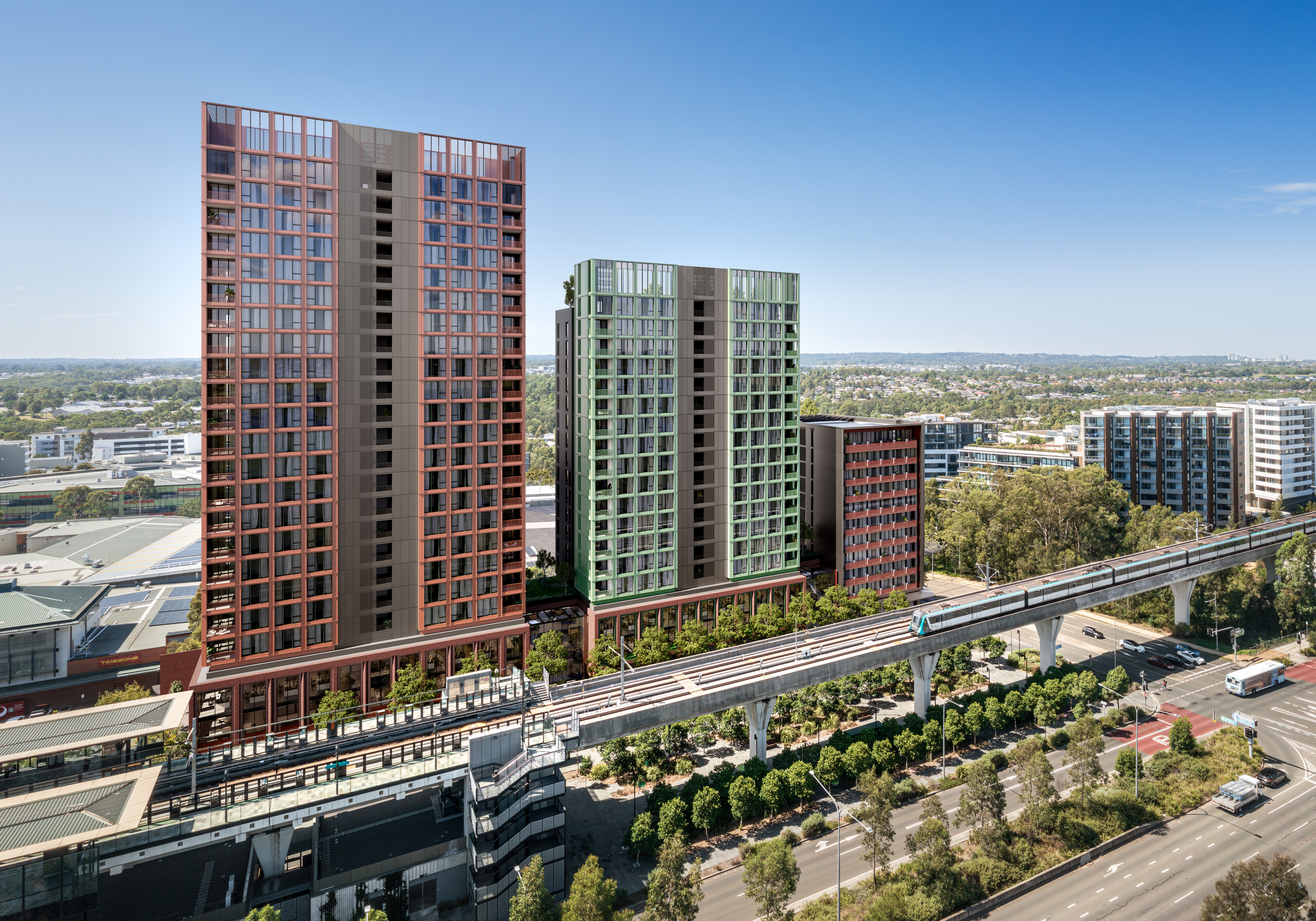
Innovating future living, one building at the time
We could not be prouder of what is taking shape on site. To watch many years of research and development, innovative thinking and hard work starting to materialise in front of us is enormously rewarding.
Faster delivery 🡪 A cost curve that bends the right way 🡪 A pipeline that compounds the gains with every project 🡪 That is what productivity looks like when you start thinking out of the box, and it is how we intend to deliver the homes Australia needs, with next-generation rental communities and homes that can actually be delivered at scale.
Written by Steven Mann
Published: 13 July 2026