Freecity Innovation Insights No.9 – The Inherent Advantages of VMC, part 1 of 6: The case for precision, quality, accuracy and the weight advantage of VMC
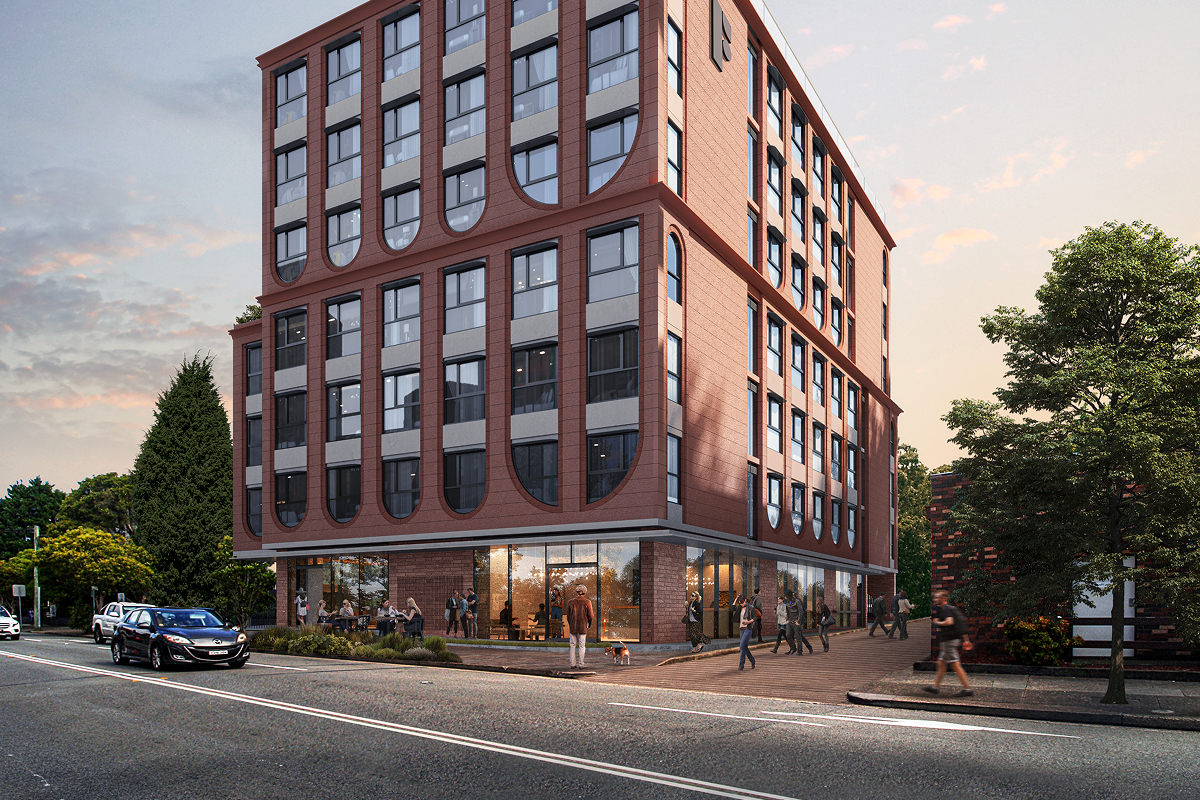
When people talk about Volumetric Modular Construction, the conversation usually gravitates to speed and cost. How much faster? How much cheaper? These are legitimate questions, but they risk eclipsing an equally important part of the story is: the quality and precision advantages of factory production in high-rise residential projects, and what that means for the buildings we are delivering and the people who will live in them.
This Innovation Insight – focuses on what we believe is an under appreciated dimension of the VMC case: the performance benefits that come from building in a controlled environment, and the structural weight advantage that steel modular construction carries over conventional methods.
Building to a high standard
This is a must have for residential apartment projects! Traditional construction is inherently variable: materials are cut, fixed and finished by different trades in different conditions, across different days, with varying levels of supervision. Weather adds another layer of unpredictability: heat, humidity, rain and wind all affect the quality of building components in ways that are sometimes difficult to detect.
Factory production changes the equation: with precise measurements held to a 2mm tolerance and standardised components and processes throughout, the result is a consistent product where quality is inspected at the point of production rather than at the point of handover. As a long-term owner of Living Sector Assets, we believe this level of precision and care in manufacturing will translate directly into efficient operations and a better experience for our residents. This is a particularly important consideration at a time when the Australian apartment sector has been scarred by high-profile defect crises, undermining confidence from consumers in new residential construction.
Underpinning this performance ambition is a rigorous Quality Management Plan that governs every stage of fabrication. This includes step-by-step fabrication guides, hold points for fabrication sign-off, inspection and test plans, construction material list checks, and PCA certification checklists. Additionally, Chinese-manufactured prototype modules are shipped to Australia for full inspection and stress testing, providing an additional layer of assurance that what leaves the factory will meet our expectations.
The repeatability of modular production also creates the conditions for ongoing improvement. Every module produced is an opportunity to refine the process and build on what came before. Unlike traditional construction, where knowledge walks off the job at the end of each trade package, the institutional knowledge that accumulates in a factory environment compound over time, and quality measurably improves over time. The model is also based around continuous improvement, every time you find a better product.
The proof is in the performance
Our modules incorporate double glazed window units for improved acoustics and condensation control, low-E glass for improved thermal comfort with maximised daylight, and quality external finishes, including terracotta and non-combustible solid aluminium cladding. The performance of our buildings will also be verified upon completion targeting 5 Star Green Star and WELL for Residential certification processes, which require rigorous independent testing across a range of liveability measures including air tightness, volatile organic compound levels, formaldehyde levels, acoustic performance and thermal comfort. These are a direct test of whether the quality we have built in at the factory translates into a genuinely better living environment for our residents.
The weight advantage
Steel structure VMC is significantly lighter than equivalent concrete construction. Our modules at Herring Road are a good example: the average final weight with full finishes, fittings and cladding is approximately 520 kg per square metre. Equivalent traditional construction with concrete and finishes would come in at around 1,000 kg per square metre – that is roughly half the weight.
Lighter structures mean reduced foundation requirements, lower loads on adjacent infrastructure, and greater flexibility in where and how high-density living sector development can be delivered. Many of the best transit-oriented development sites sit above or adjacent to existing infrastructure, including rail corridors, underground utilities and heritage structures. The ability to build at a significantly lower weight than conventional construction opens up sites that would otherwise be marginal or unviable.
Weight also has direct implications for transport and logistics. Lighter modules mean more manageable loads, simpler cranage, and fewer constraints on delivery scheduling, all of which contribute to the productivity advantages that make VMC compelling at scale.
Alignment of Living Sector Asset using VMC
The Living Sector Asset class has created an alignment between the Landlord and Tenant, such that Developers are building high quality buildings to last for the long term. To ensure you don’t get superseded, you build the best possible building you can today, so you don’t have to refurbish it tomorrow. That is why Freecity is bring VMC to Living Sector Assets to change this performance imperative and we believe there is more to come!
Spotlight: Space Labs Leadership
I am pleased to introduce Suker Yang, Director of Modular Development at Space Labs Australia, who joined the team in April 2024 and brings close to two decades of modular construction expertise spanning China, Australia, New Zealand, and the United Kingdom.
Suker’s career is one of the most comprehensive in the Oceania modular sector. His experience includes the delivery of the Perth Ibis Styles Hotel, one of Australia’s landmark early VMC projects.
At Space Labs, Suker leads the modular development function, translating design intent into factory ready outcomes and managing the critical interface between the Australian project team and the manufacturing process in China. It is one of the most technically demanding roles in our business, sitting at the point where precision engineering, cross cultural coordination and construction delivery converge.

Suker Yang
Director of Modular Development, Space Labs Australia
Written by Steven Mann
Published: 10 April 2026